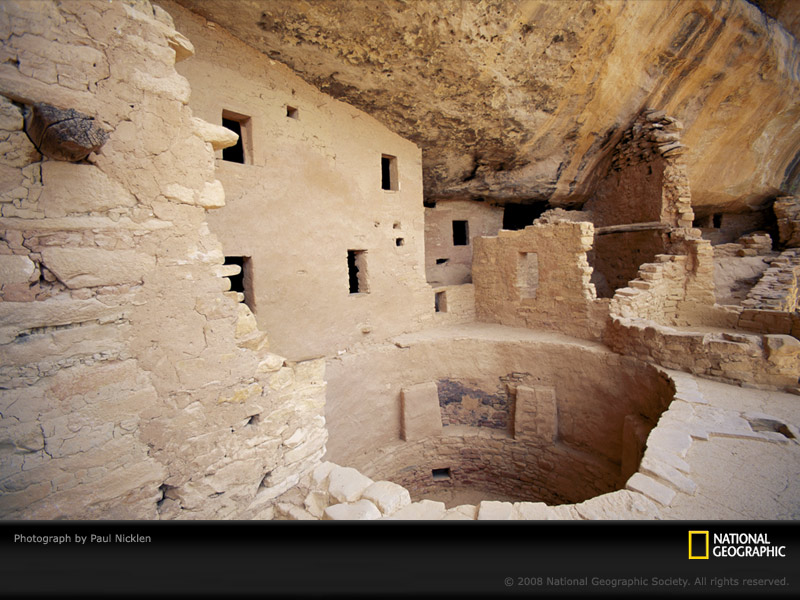
From the pages of The National Geographic Magazine Volume 48, September 1925
“Exploring the Canyon of Death: Remains of a People Who Dwelt in Our Southwest at Least 4,000 Years Ago are Revealed”
The body was that of an old man, surely once a priest or chief. Beside the usual offerings of beads, baskets, and sandals, there lay above his buckskin wrapping a flute, one end beneath the chin, the other between the thighs. …
Along the left side was a mass of wooden objects, all readily perishable, hence extremely rare in perfect condition. Conspicuous among them were bone-tipped flint flakers with whch knives and projectile points were made, several spears, four handsomely wrought spear throwers, and three more flutes.
I picked up one of the flutes, shook the dust and mouse dung out of it, and placed it to my lips. The rich, quavering tones which rewarded even my unskilled touch seemed to electrify the atmosphere. In the distance Navajo workmen paused with shovels poised, seeking the source of the sound. A horse raised its head and neighed from an adjacent hillside and two crows flapped out from a crevice overhead.
Our little group was motionless for a dozen heartbeats, which seemed as many minutes. In the weird silence it was as if time had been halted in its flight — nay turned back — for in swift array there crowded through my consciousness the scenes of grief and mourning, of savage pomp and ceremonial, amid which the tones of that instrument had last echoed from the selfsame cliff that now glistened under the rays of the setting sun, which for a brief moment had broken through the dark clouds masking the November sky. - Earl H. Morris
Comments
